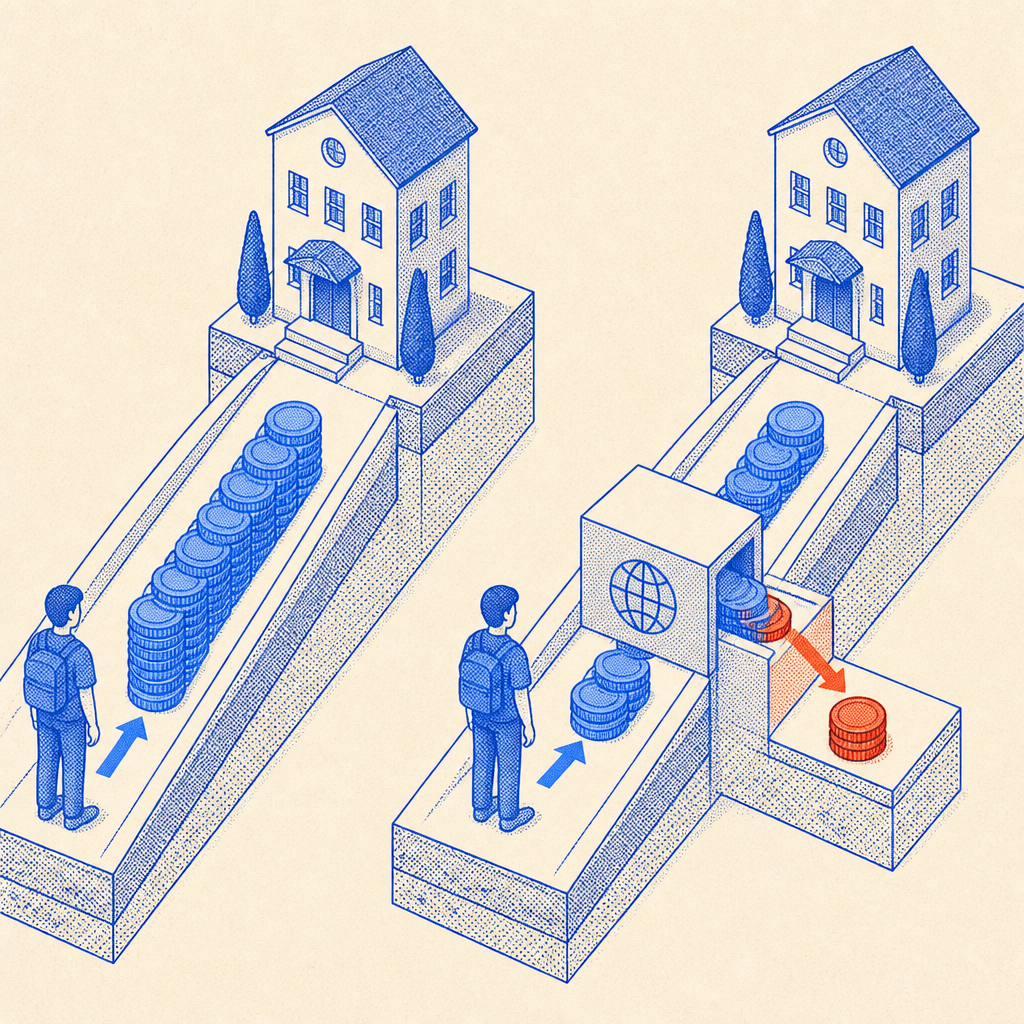
A guest books your apartment in Südtirol on Booking.com. Seven nights at €120 a night: €840. You receive €688.80. The other €151.20 went to a portal headquartered in Amsterdam. That single booking is not dramatic. Multiply it by a season, say €120,000 in annual accommodation revenue, 70% coming through portals at 18% commission, and you have paid out roughly €15,000 before you bought a single bag of flour for the breakfast table. There is a better setup, and it does not require abandoning the portals. It requires using them smarter.
The Real Cost of Portal Dependence
Commission rates on the major booking portals range from around 15% to 25% depending on the platform, your participation level, and any visibility programs you have opted into. Booking.com typically sits at 15-18% for standard listings; Airbnb charges hosts 3% but guests see a 14-16% service fee that inflates the comparison price. Expedia and its brands can reach 20-25%. On a full season of €120,000 in revenue at an average 18% portal rate across 70% of bookings, you are paying approximately €15,120 per year in commissions. That is not a line item to optimize. That is a second salary, or the entire annual budget for a professional website, a channel manager, and an email marketing tool, with money left over.
What the Portals Do Well, and Why You Should Keep Using Them
I want to be clear about something before we go further: the portals are genuinely good at discovery. A guest from Hamburg who has never visited Südtirol is not going to find your specific B&B in Val Pusteria by Googling "Frühstückspension near Bruneck." They will open Booking.com, filter by dates and guest count, and see a map. That first stay, the one where they discover your property, is often worth paying a commission for. The mistake is not using the portals. The mistake is letting them own the entire guest relationship forever.
The smart play is to treat the portals as a customer-acquisition channel with a known cost, and to invest in converting every portal guest into a direct guest on the next stay. That conversion is worth far more than the commission savings on the first booking. A direct returning guest brings full revenue, zero commission, and is measurably more loyal than a portal-acquired guest, because they chose you, not the algorithm.
The Direct-Booking Infrastructure: What You Actually Need
Running direct bookings well requires four things working together: a fast, multilingual website with real photography; a live availability calendar that guests can check without emailing you; a booking and payment flow that handles deposits and confirmations automatically; and a channel manager that keeps your own calendar and all the portals synchronized so double bookings are impossible.
- A fast multilingual website (German, Italian, English minimum) with real photographs and clear pricing.
- A real-time availability calendar guests can check themselves, not a "contact us to ask" button.
- An online booking flow: guests select dates, see the total, pay a deposit, and receive an automatic confirmation email.
- A channel manager that syncs your master calendar with Booking.com, Airbnb, and any other portals you list on, blocking availability instantly when a booking comes in.
- An automated follow-up email after each stay with a direct-booking incentive for the next visit.
The Conversion Move: From Portal Guest to Direct Guest
The most cost-effective investment you can make is in converting portal guests who have already stayed with you. They know your property. They liked it enough to come once. A simple card left in the room, "Book your next stay directly at [your website] and save the service fees", combined with a follow-up email three weeks after check-out, converts a meaningful share of repeat guests to direct. You are not competing for their attention at discovery stage. You are reminding them of something they already chose.
The follow-up email is critical and it requires owning the guest contact data. Note that Booking.com anonymizes guest email addresses during the stay; you need to collect direct contact information at check-in (a paper or digital register works fine) to make the post-stay sequence work. Airbnb allows in-platform messaging but not direct email export. This is a deliberate friction the platforms build in, another reason to run the direct infrastructure in parallel from the start.
The Math: When Does a Direct-Booking Website Pay for Itself?
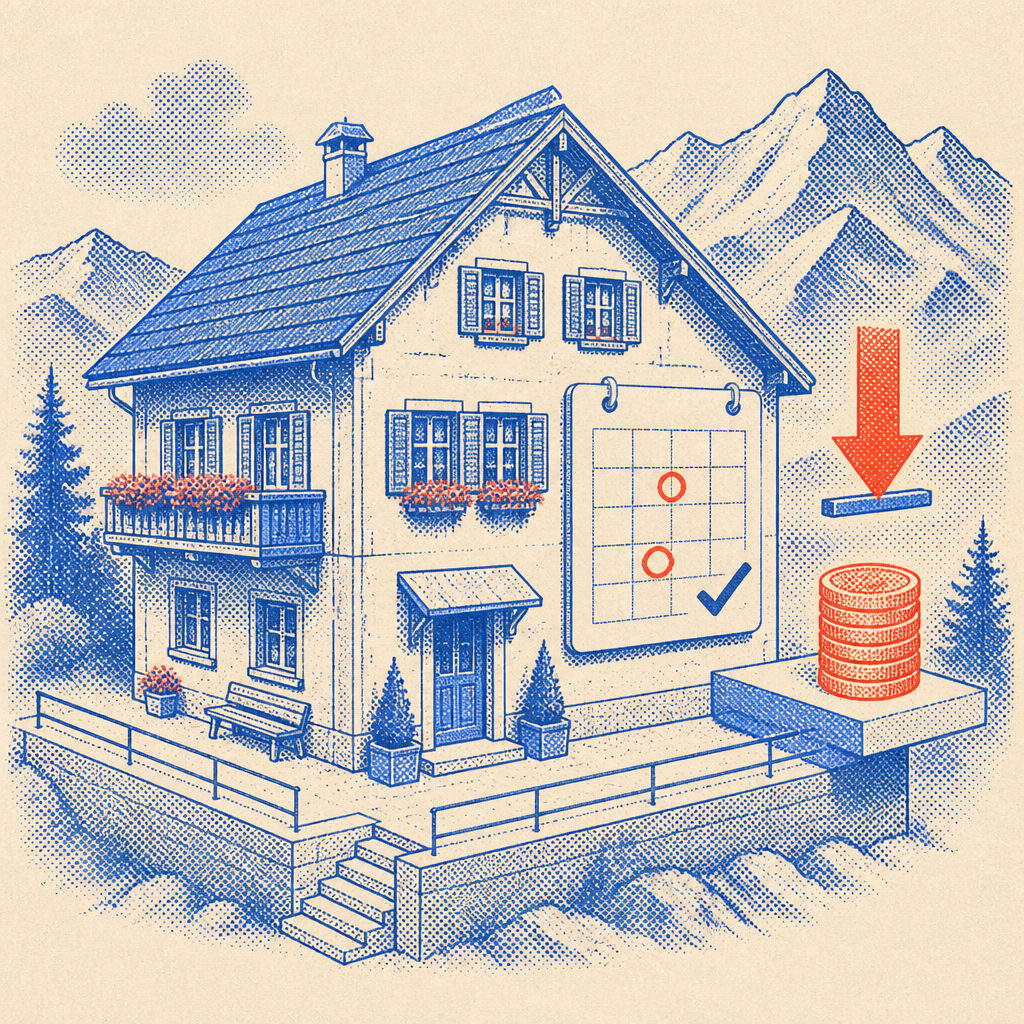
A professional direct-booking website, built properly, with multilingual content, a real booking engine, and channel management integration, costs somewhere between €2,000 and €4,000 as a one-off build for a small Südtirol property. Let's use €3,000 as the reference number. If your annual accommodation revenue is €120,000 with 70% via portals at 18% commission, and shifting just 30% of those portal bookings direct saves you approximately €4,536 per year, the website pays for itself in about eight months. Every year after that, those savings go straight to your bottom line. The code block below lets you run the numbers for your own property.
// booking.ts
// Data model for a reservation, works for direct bookings and portal bookings alike.

type BookingSource = 'direct' | 'portal';

interface Booking {
  id: string;            // e.g. "BK-2026-0847"
  guestName: string;
  guestEmail: string;
  checkIn: string;       // ISO 8601 date, e.g. "2026-07-12"
  checkOut: string;      // ISO 8601 date, e.g. "2026-07-19"
  nights: number;        // checkOut - checkIn in days
  guests: number;        // total persons
  ratePerNight: number;  // EUR, before commission
  totalGross: number;    // ratePerNight * nights
  source: BookingSource;
  portalName?: string;   // "Booking.com" | "Airbnb" | "Expedia", only if source === 'portal'
  commissionRate: number; // 0.00 for direct, e.g. 0.18 for 18 % portal commission
  commissionAmount: number; // totalGross * commissionRate
  netRevenue: number;    // totalGross - commissionAmount
}

// Example: same stay, two scenarios
const directBooking: Booking = {
  id: "BK-2026-0847",
  guestName: "Familie Müller",
  guestEmail: "mueller@example.de",
  checkIn: "2026-07-12",
  checkOut: "2026-07-19",
  nights: 7,
  guests: 2,
  ratePerNight: 120,
  totalGross: 840,
  source: "direct",
  commissionRate: 0.00,
  commissionAmount: 0,
  netRevenue: 840,
};

const portalBooking: Booking = {
  ...directBooking,
  id: "BK-2026-0848",
  source: "portal",
  portalName: "Booking.com",
  commissionRate: 0.18,
  commissionAmount: 151.20,
  netRevenue: 688.80,
};

// For the same family staying 7 nights at €120/night:
// Direct  → you keep €840.00
// Portal  → you keep €688.80  (Booking.com keeps €151.20)
// commission-calculator.js
// How much are you paying the portals each year?
// Run this in the browser console or Node, no dependencies.

/**
 * Calculate how much you pay in portal commissions annually
 * and how much you could recover by shifting some bookings direct.
 *
 * @param {number} annualRevenue      - Total accommodation revenue (EUR/year)
 * @param {number} portalShare        - Fraction currently booked via portals, e.g. 0.70 for 70 %
 * @param {number} commissionRate     - Portal commission rate, e.g. 0.18 for 18 %
 * @param {number} directShiftTarget  - Fraction of portal bookings you aim to move direct, e.g. 0.30
 * @returns {{ currentCommission, potentialSaving, newPortalCost, breakEvenMonths }}
 */
function annualSavings(
  annualRevenue,
  portalShare,
  commissionRate,
  directShiftTarget = 0.30
) {
  const portalRevenue      = annualRevenue * portalShare;
  const currentCommission  = portalRevenue * commissionRate;
  const shiftedRevenue     = portalRevenue * directShiftTarget;
  const potentialSaving    = shiftedRevenue * commissionRate;
  const newPortalCost      = currentCommission - potentialSaving;

  // Rough payback: a solid direct-booking website costs ~€2,000-4,000 once-off
  const websiteCost        = 3000;
  const breakEvenMonths    = Math.ceil((websiteCost / potentialSaving) * 12);

  return {
    currentCommission:  Math.round(currentCommission),
    potentialSaving:    Math.round(potentialSaving),
    newPortalCost:      Math.round(newPortalCost),
    breakEvenMonths,
  };
}

// Example: €120,000 / year, 70 % via portals at 18 % commission, target 30 % shift
const result = annualSavings(120_000, 0.70, 0.18, 0.30);
console.log(result);
// {
//   currentCommission: 15120,   ← you pay this every year right now
//   potentialSaving:   4536,    ← you recover this by shifting 30 % direct
//   newPortalCost:     10584,   ← what remains after the shift
//   breakEvenMonths:   8        ← website pays for itself in 8 months
// }
Dynamic Pricing and the 2025 Südtirol Digital Push
In 2025, the "südtirol privat" initiative, the regional digital platform for private landlords (Privatvermieter) in Südtirol, began rolling out tools including dynamic pricing, a digital concierge component, and direct-booking infrastructure for smaller operators. This is not coincidental. The region has recognized that private accommodation providers are disproportionately dependent on the portals compared to larger hotel groups, and that the commission bleed compounds over years. Dynamic pricing tools let you adjust nightly rates based on local demand, events, and occupancy, the same algorithmic advantage the portals use to their benefit, now available on your own channel.
- Audit your current booking mix: what share comes via portals, and at what average commission rate?
- Build or commission a direct-booking website with multilingual content, a live calendar, and an integrated payment and confirmation flow.
- Set up a channel manager to keep your own calendar and all portal listings in sync, this is non-negotiable once you run both channels.
- Add a conversion touchpoint: a card in the room and an automated post-stay email with a direct-booking offer for the next visit.
- Collect guest contact data at check-in and build a simple email list for seasonal offers and early-access availability.
The portals found your first-time guests. Your website keeps them. That is the right division of labor, and it costs a fraction of what you are paying in commissions.
What This Looks Like in Practice
If you run a hotel, B&B, holiday apartment, or private rental (Ferienwohnung / appartamento vacanze) in Südtirol and your booking mix is currently 60-80% portal-driven, the direct-booking shift is the highest-return infrastructure investment you can make in 2026. You do not need to build an e-commerce empire. You need a fast, honest website in three languages, a booking calendar that works on a phone at midnight, and a follow-up sequence that turns your best portal guests into direct regulars. If you want to see the numbers calculated for your specific property, contact me and we will run through it together.